

I’ve been on a bit of a run lately.
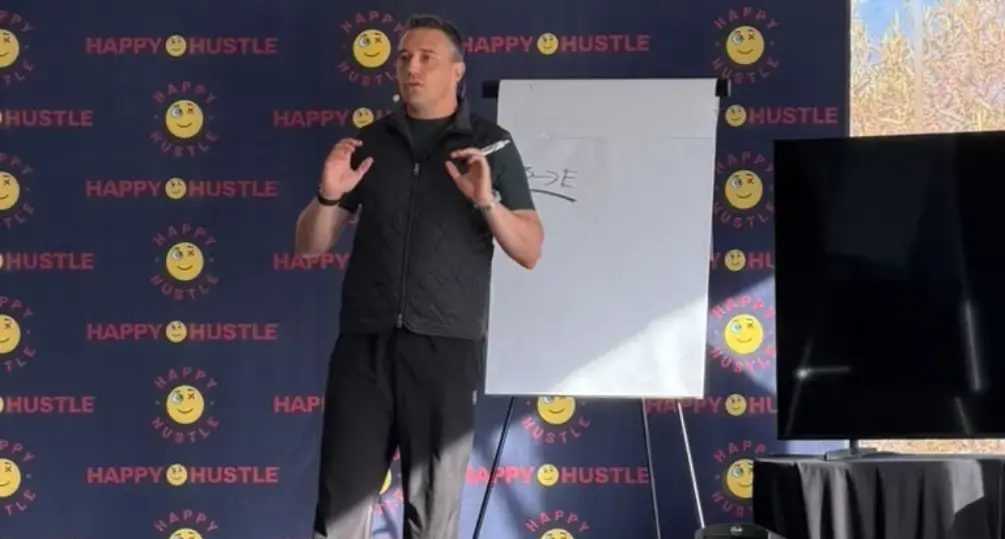
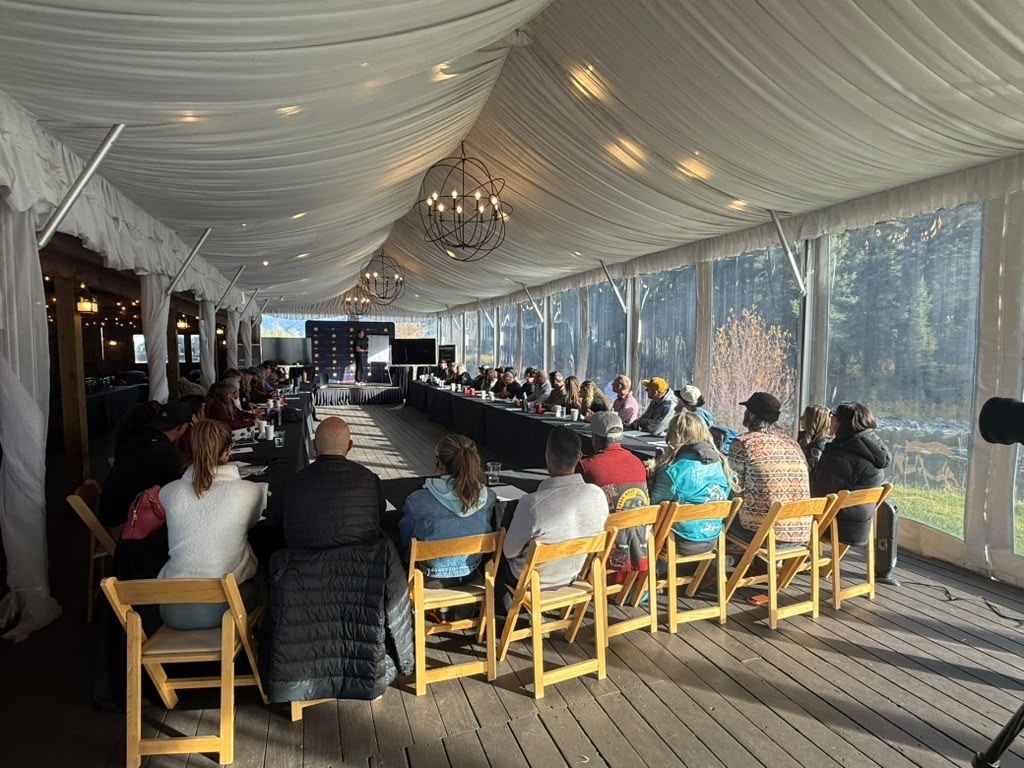
Over the past few weeks, I’ve been attending and speaking at several events with entrepreneurs, investors, and ultra-high performers. Last weekend, I had the opportunity to facilitate at a couples retreat in Montana.
And a number of the couples in the room had been through some very difficult seasons in their relationships.
Some had reached a point where divorce was a very real possibility.
Several of those couples are now in a great place.
Not because one person finally figured out how to fix the other.
In many cases, the transformation began when one person stopped making the other person responsible for how they felt and started focusing on how to manage themselves differently.
After working with thousands of couples over the last twenty-four years, I was reminded this weekend just how powerful that shift can be.
Because most of the challenges people experience in a relationship begin with an inability to identify and manage their own experience or emotional state.
Instead, we defer responsibility to the other person.
I’m angry because of what you did.
I’m resentful because you don’t appreciate me.
I’m anxious because of what’s happening with the kids.
I’m overwhelmed because of the business.
That doesn’t mean there aren’t dynamics in the relationship that need to be addressed.
There may be behaviors that need to change.
There may be challenges around money, health, raising the kids, managing the household, or the way you communicate with each other.
Those things still need to be tended.
But the first step is almost always the same.
Manage yourself.
The Relationship Has Three Sides
I think about a relationship as having three aspects.
There’s you.
There’s the relationship itself.
And there’s the other person.
We tend to focus most of our attention on the third one.
What are they doing?
What aren't they doing?
What do they need to change?
But think about the relationship itself as a living, breathing entity.
It is the accumulation of the energy the two of you pour into it through the way you interact with each other.
And you are responsible for the energy you bring.
If I’m showing up with anger, resentment, and anxiety, and that’s the primary experience of myself I bring to Caitlyn day after day, week after week, month after month, it’s going to have an impact on the relationship.
And the anger doesn’t even have to be directed at her.
Maybe I’m worried about the business.
Maybe I’m angry because I don’t have enough time.
Maybe I’m overwhelmed by something happening at work or frustrated with an employee.
If I carry that emotional energy in my nervous system when I walk through the door, the person I love still has to interact with it.
She has to respond to it.
And if the anger, resentment, or anxiety is directed at her, the impact becomes exponential.
This is particularly important for high performers because we can become so accustomed to carrying the emotional intensity of our work that we stop noticing what we’re bringing home with us.
But the relationship notices.
And so does the person we love.
What Are You Feeding the Relationship?
This is where vision becomes important.
Ask yourself:
Where do I want this relationship to be five years from now?
What do I want to nurture?
What do I want to cultivate?
What do I want the experience of this relationship to be?
And then hold yourself accountable to that vision first.
If I’m bringing anxiety, overwhelm, resentment, sadness, or insecurity into the relationship today, I can ask a very simple question:
If I fuel this relationship with this energy for the next five years, what is the likely outcome?
Because whatever you consistently bring to the relationship is what you’re feeding it.
And one of the most fascinating things I’ve observed working with couples over nearly two and a half decades is that you often don’t need both people to begin the transformation.
If one person commits to bringing a different emotional energy into the space, the relationship begins to change.
Even if the other person does nothing.
They may not be doing their work.
They may not even be aware that something has changed.
But suddenly, instead of reacting to anger, resentment, anxiety, or overwhelm, they’re interacting with something different.
Joy.
Acceptance.
Gratitude.
Compassion.
And because the stimulus in the relationship has changed, they have something different to respond to.
Over time, their behavior begins to change too.
Love Isn’t Enough
This weekend, I talked about something that can be surprising for people to hear.
If I had to choose the two most powerful emotional energies to consistently bring into a relationship, I wouldn’t choose love.
I’d choose gratitude and compassion.
We have a fantasy that as long as love is present, everything else is going to work itself out.
That’s simply not true.
You can love someone deeply and still not know how to communicate with them.
You can love someone and not know how to name your expectations.
You can love someone and have no competency around boundaries.
You can love someone and continually bring resentment, anger, insecurity, and anxiety into the relationship.
Love can be incredibly strong and prevalent, and the relationship can still fail.
But gratitude and compassion create a conduit through which a tremendous amount of love can actually be present in the relationship.
When I’m intentionally compassionate with myself and the other person, and I’m bringing genuine gratitude for who they are and what they bring to my life, I begin fueling the relationship with something very different.
And now they have something different to respond to.
That doesn't mean you ignore inappropriate behavior.
It doesn't mean you stop naming what you need, want, or desire.
It doesn't mean you abandon boundaries.
It means you tend to your state first so you can manage those things from a place that is actually capable of producing the relationship you say you want.
Ninety Percent Comes First
This is simple in concept.
It’s not necessarily easy to apply.
But if you develop the competency to manage the emotional energy you bring into your relationship despite the circumstances—despite what’s happening in the business, despite what’s happening at work, despite what trouble your teenage kid got into recently—you can solve about 90% of the challenges in the relationship simply by changing the space the other person is responding to.
And then something else becomes possible.
You can learn.
When we’re angry, resentful, anxious, overwhelmed, or otherwise deregulated, it’s very difficult to acquire a new skill or accept a new philosophy.
We’re diminished.
We’re not particularly interested in hearing about the new communication framework we should try.
We don't want to hear a new perspective on our expectations.
We want the other person to stop doing the thing that’s making us angry.
But when we operate from gratitude, compassion, and joy, and we genuinely want to optimize the relationship, we become much more capable of acquiring the competencies that address the other ten percent.
Communication.
Expectations.
Needs, wants, and desires.
Boundaries.
Money competency.
Whatever circumstances actually need to be tended inside the relationship.
State management doesn't mean those things don't matter.
It means you finally put yourself in a state where you can manage them well.

Start With Your Side
One of the easiest things to do when a relationship is struggling is to create a list of everything the other person needs to do differently.
And maybe some of those things are legitimate.
But if you want to transform the relationship, start with the side you actually control.
Yours.
Treat the relationship as 100% your responsibility.
Not because the other person has no responsibility.
Not because everything that happens is your fault.
But because the relationship you have is, in part, a reflection of the way you are showing up inside of it.
Change that, and the relationship itself changes.
So before you decide what your spouse needs to do differently, return to the vision.
Where do I want this relationship to be five years from now?
What kind of relationship do I want to create?
What do I want it to feel like to be together?
And then ask:
What am I bringing into the relationship today?
Because whatever that energy is, you’re not simply experiencing it.
You’re feeding it into something you say matters deeply to you.
And the person you love has to respond to it.
Other Ways to Engage
If this conversation resonated, I’d revisit Issue 031 — Another Million Dollars Won’t Fix Your Marriage. But This Will, where we talked about why changing external circumstances doesn’t repair an internal relationship pattern.
And Issue 032 — The Quiet Exit, where we explored how relationships are built—and lost—through the accumulation of seemingly small moments.
And as always, you can find The Connection Fix on the Blog and The Connection Fix Podcast.
One Question to Sit With
Before I wrap...
Think about the emotional energy you’ve brought into your closest relationship over the last thirty days.
Not what your partner has brought.
Not what they’ve done wrong.
Not what you wish they would change.
What have you been feeding the relationship?
And if you brought that same energy into it every day for the next five years...
Where would the relationship end up?
That answer may tell you exactly where to begin.
More soon.
Have a great rest of your day, and I’ll look forward to connecting again next week.
Joey