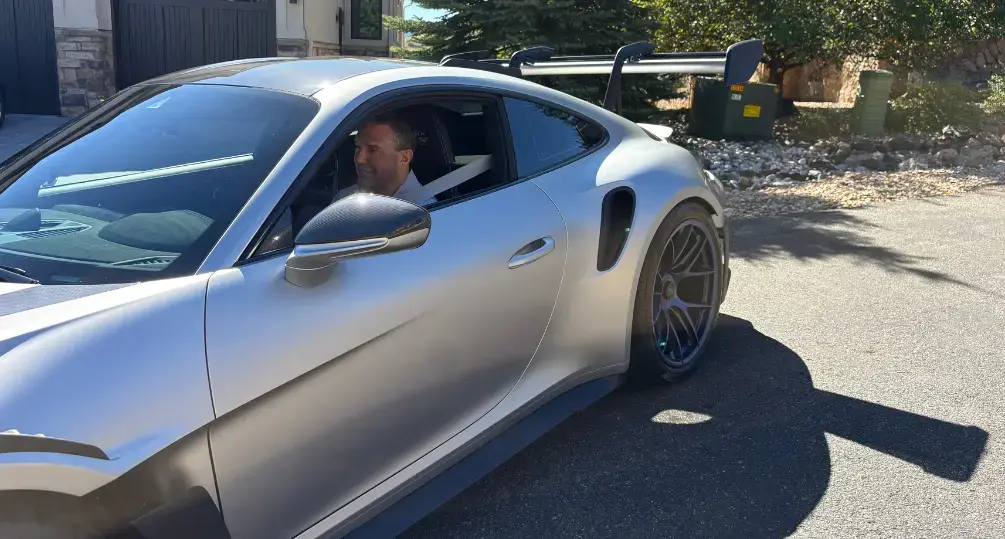
I ran across this photo Wendy took of me in the GT3RS—the one I recently returned to the dealership.
Man, did I love driving that car.
Just thinking about getting behind the wheel of it always lit me up.
And maybe the best part was the reactions of my passengers. Did I mention I like to drive fast?
There’s a moment that happens when you’re driving a car you really love.
Not just a nice car.
The one you’ve thought about.
The one you’ve imagined.
The one you’ve worked toward.
And when you’re in it… something shifts.
It’s not just the mechanics.
It’s not just the performance.
It’s how you feel.
There’s a sense of presence.
A sense of certainty.
A sense that you’re exactly where you’re supposed to be in that moment.
And that feeling?
That’s not just a byproduct.
It’s part of the mechanism.
Because when it comes to intuition…
Emotion isn’t separate from the process.
Emotion is what activates it.
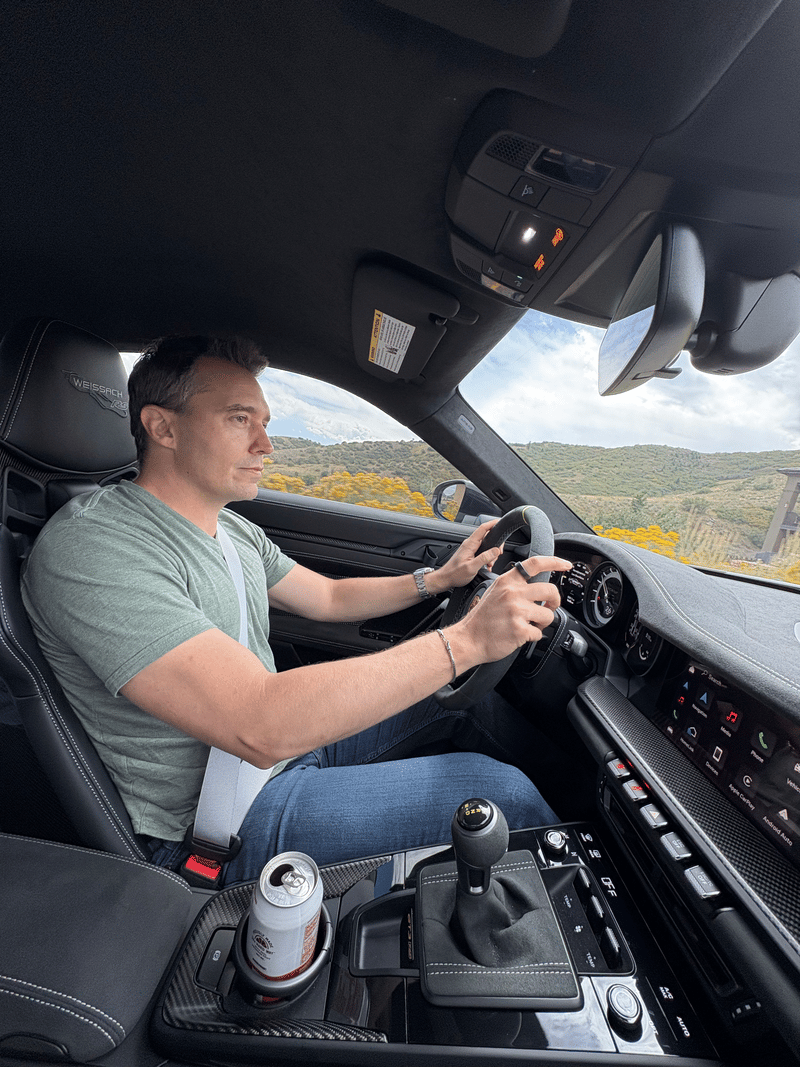
Last week, we explored Intensity of Focus.
We talked about how your attention trains intuition—
and how what you consistently focus on becomes what your system moves toward.
This week, we’re taking the next step.
Because if focus tells the system what matters…
Emotion determines how much it matters.
Intuition Needs a Destination
Before we even talk about emotion, we have to anchor back to something fundamental.
Intuition only works in the presence of vision.
Because intuition’s job is simple:
It bridges the gap between where you are…
and where you want to go.
If there’s no destination, there’s no gap.
And if there’s no gap, there’s nothing for intuition to do.
So whether your vision is external — a relationship, a business, financial freedom…
Or internal —
“I want to feel peaceful 90% of the time”
“I want to experience more joy”
“I want to become more compassionate”
That still counts.
That’s still a defined outcome.
And once that outcome is clear…Now intuition has a job.
The First Lever: Love-Based vs Fear-Based State
When it comes to emotion and its role in turning on intuition, there are three levers.
The first is the most fundamental:
Are you operating from a love-based state…or a fear-based state?
Because here’s what most people don’t realize:
Fear-based states shut down intuition. They shut down creative thinking, critical thinking.
Doubt.
Insecurity.
Shame.
Guilt.
Anger.
Resentment.
When you’re in those states, your cognitive function drops.
Your intuitive mechanism goes quiet.
You lose access—not a little, but a lot, completely.
That’s why you can “know what to do” in one moment…and feel completely lost in another.
Nothing changed externally.
Your state changed.
And when your state changes… your access changes.
So if intuition is going to work consistently…
You have to train yourself to drive toward your vision from a love-based state.
Inspiration.
Passion.
Peace.
Gratitude.
Not occasionally.
Consistently.
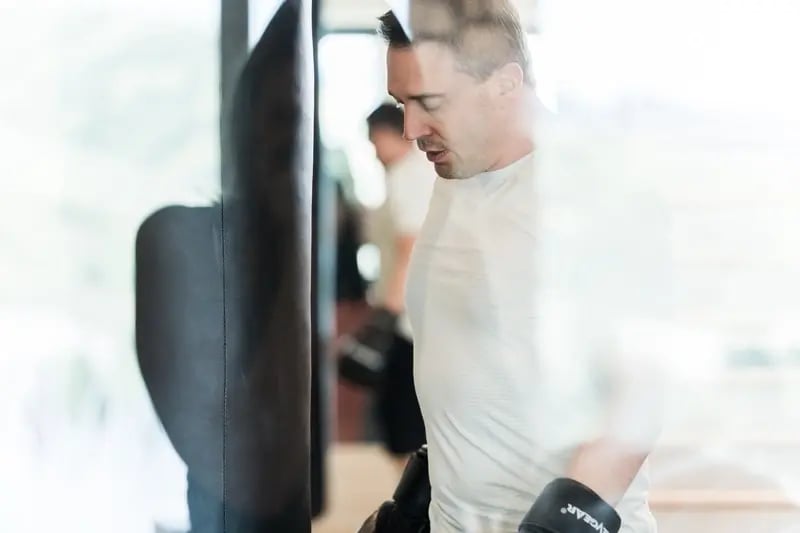
A great example of this is the state that I bring to moving the body every day.
The Second Lever: Faith vs Hope
The second emotional lever is more subtle, and it’s where most people get stuck.
Because this is the difference between hope… and faith.
Hope says: “That would be nice.”
Faith says: “It’s happening.”
Even if you don’t know how yet.
Even if there’s no evidence yet.
Most people want certainty before they move toward vision.
They want the plan.
The steps.
The guarantee.
But intuition doesn’t activate that way.
It activates when you bring certainty first.
When you decide: I don’t know how this is going to happen…but I know it will.
And from that place…
Something shifts.
You enter a kind of flow state.
And your intuition starts working on your behalf.
Solving problems.
Connecting dots.
Showing you paths you couldn’t see before.
Not because the answers suddenly appeared.
But because your intuition is now engaged.
And when you fall out of that state—and you will—
The work is simple:
Come back.
Reinforce it.
Remind yourself:
What have I already created?
How did I get here?
What am I capable of?
What am I willing to do?
And most importantly:
Am I willing to do whatever it takes to figure this out?
That’s where faith gets rebuilt.
The Third Lever: Using Emotion Intentionally
The third lever is where this gets really interesting.
Because it’s not just about being in what most people think of as a “good” emotional state—I call it a love-based state.
It’s about using emotion strategically.
And this is where people get confused.
Because yes—
you want to drive from a love-based state.
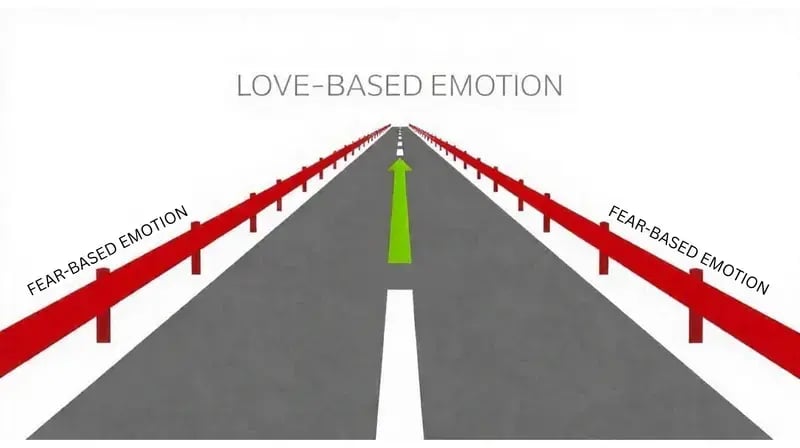
That’s the primary fuel.
That’s where you create from.
But there’s also a place for fear.
Not as the driver.
As a guardrail.
Here’s how this works…
Your nervous system is wired for survival.
It’s constantly scanning for threats.
So instead of ignoring that…
We use it.
We define the threat. We ask:
What do I need to avoid?
What would compromise the life I’m trying to create?
And we link fear to that.
Not to live in it.
But to program the unconscious.
So it understands what to avoid. We’re basically saying to the unconscious:
That’s not safe.
That’s not aligned.
Avoid that.
For example:
If your vision is financial freedom…
You anchor love to the outcome:
Freedom.
Choice.
Living life on your terms.
But you also define the threat:
Debt.
Scarcity.
Dependence.
And you make that real enough internally…
That your unconscious begins to move away from it automatically.
Not because you’re obsessing over it.
But because your brain recognizes it as something to avoid.
So now you have both:
A powerful pull toward what you want…
And a clear boundary away from what you don’t.
That allows us to move forward in alignment.
The Role of Imagination
Now here’s where everything starts to come together.
Because how do you actually generate these emotional states?
You use your imagination.
Not just to think about what you want…
But to experience it.
To see it.
To feel it.
To bring texture to it.
Because imagination does two things:
Yes, it directs attention.
But more importantly…
It activates emotion.
When you truly imagine:
Driving the car.
Living in the home.
Being in the relationship that you want to be in.
Experiencing the details of the trip.
Moving through your day as the person you’re becoming…
You don’t just think it.
You feel it.
And that feeling…
Is what signals to your system:
This matters.
This is real.
Move toward this.
That’s what fuels intuition.
Bringing It Together
So now you can start to see how this works.
Focus tells your system what to pay attention to.
Emotion tells your system how important it is.
And when those two align…
Intuition engages.
Without emotion, focus can be dry.
Without focus, emotion can be scattered, random, or reactive.
But together?
They become incredibly powerful.
Where We’re Going Next
Next week, we’re going to complete this picture with the third element:
Time Investment.
Because once you understand focus and emotion…
The next question becomes:
Where are you actually investing your time?
And how does that investment build the library your intuition draws from?
We’ll go there next.
Now, for those who have expressed an interest in going deeper with this…
We’re bringing all of it together live at the Power of Intuition Virtual Intensive.
This is where we take everything we’re talking about in this series…
And actually train it.
In real time.
Step by step.
So it’s not just something you understand…
It’s something you can apply and start leveraging.
So check that out if it makes sense for you.
Also, know that The Connection Fix is available to you in a number of different formats—you can pick the format where you train best.
Find it on YouTube, or on The Connection Fix Podcast.
One Question to Sit With
Before I wrap, I want to invite you to notice something.
Think about something you say you want to create right now.
A result.
A change.
A vision.
And ask yourself honestly: What emotion have I been bringing to it most often?
Not the one you want to feel.
The one that’s actually been there.
Is it:
Certainty?
Inspiration?
Gratitude?
Or…
Doubt?
Anxiety?
Fear?
Because whatever emotional pattern you’ve actually been bringing to it…
Is what your intuition has been responding to.
If you’re willing, send me an email and share what you noticed. Just a sentence or two, letting me know what you’re wanting to create, and the emotion you’ve been bringing to it.
That awareness alone can shift everything
And your feedback helps shape what we cover in the future.
I read all your responses, and I’m grateful that so many of you take the time to share with me.
More soon.
Have a great rest of your day, and I’ll look forward to connecting again next week.
Joey